
05. The History of Brand Positioning
- 1 Section
- 3 Lessons
- 9m Duration
Chapter 5: The History of Brand Positioning
3 Lessons

LESSON OVERVIEW:
The 1960s: When Brand Stories Were Born
- The Sixties marked the shift from functional, jingle-driven ads to brands with complex personalities and cultural relevance.
- Avis: "We’re No. 2 — we try harder."
- Volkswagen: self-deprecating humor.
- Levy’s Rye Bread: early cultural diversity in advertising.
Key Insight: Brands with personality and a point of view began to win.
David Ogilvy: The Father of Advertising
- Ogilvy’s unlikely path — door-to-door stove salesman → London ad agency → Gallup researcher → WWII propagandist — gave him an unmatched foundation in consumer behavior and persuasion.
- He founded Ogilvy & Mather on three principles: Generate Big Ideas, Focus on Truth, and Incorporate Story Appeal and Singularity.
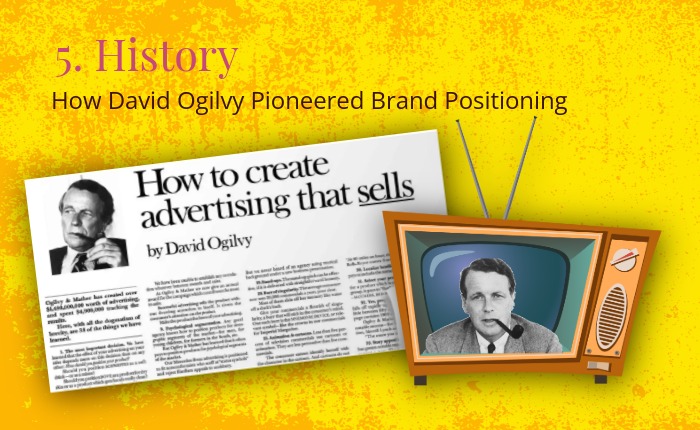
- His 1972 New York Times essay “How to Create Advertising That Sells” shared 38 principles with the world. His #1 rule:
“The effect of your advertising depends more on this decision than on any other: How should you position your product?”
Key Insight: Positioning matters more than creative execution. Even brilliant advertising can’t rescue a product fighting for the wrong territory.
Trout & Ries: The Positioning Era Cometh
- In 1973, Jack Trout and Al Ries argued in Advertising Age that RCA and GE failed by attacking IBM head-on — IBM’s position was unassailable from the front.
- The lesson for start-ups: never compete head-on with a dominant brand. Find your own niche and own it.
- Psychology insight: the human mind holds a maximum of seven brands per category — in smaller categories, often just one or two.
- Sony’s entry into U.S. televisions: instead of competing broadly, they claimed the unoccupied slot as the specialty leader in tiny TVs.
Key Insight: Find the unoccupied slot. Your job is to claim a position in the consumer’s mind before someone else does.
The Four C’s: Policing Your Brand
Every brand communication must pass all four tests:
| Clarity | Does my message clearly express the brand position? |
| Consistency | Does it follow the brand look? |
| Character | Does it express the brand personality? |
| Customer | Does it align with the needs of the target customer? |
BUY The Entire Brand Story Course for $97.00
BUY Chapter 5 as a single lesson for $9.95.
Want to submit a review? Login