1. Introduction - People Don't Buy Products; They Buy Brands.

What Will You Learn?
-
Core Premise
- People don't buy products — they buy brands.
- A brand position is a superpower that outweighs features, benefits, and pricing.
- Most start-ups neglect their brand story while focusing on business plans and financials.
- Brand stories work psychologically by evoking feelings that drive customer decisions.
Brand Story in Action
Key Examples
- Southwest Airlines: Grew from 3 planes/3 cities to 800 planes/100 destinations by owning the "low-fare" position — embodied by serving only peanuts.
- Pet Rock: A joke became a brand. Gary Dahl sold 1.5M units, proving brand story transcends product utility.
- Apple iPod vs. Creative Zen: Despite the Zen's superior specs (2x storage, longer battery, lower price), Apple's brand story proved unbeatable.
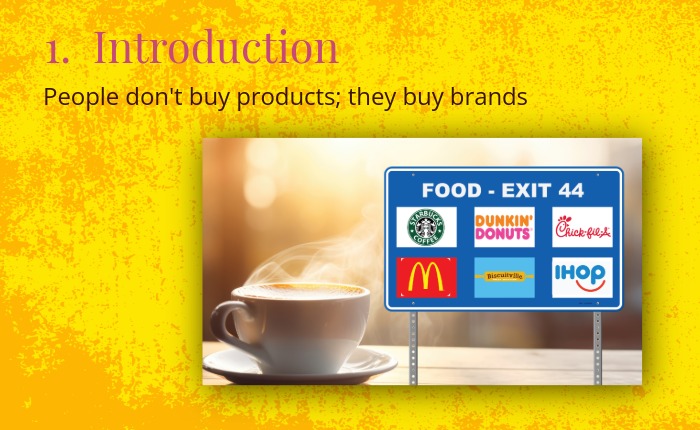
Coffee Brand Stories: A Case Study
- Starbucks — Selling ambiance and community, not just coffee (inspired by Italian coffee bars).
- Dunkin' — No fuss, great-tasting coffee, fast. Won a blind taste test vs. Starbucks 54%–39%.
- IHOP — Cozy, all-American warmth; offers only Regular and Decaf by design.
- McDonald's — Convenience and speed; McCafé struggles with an unclear premium identity.
- Chick-fil-A — Great coffee with a conscience via Thrive Farmer's Farmer-Direct Coffee.
- Biscuitville — Handcrafted, authentically Southern; biscuits made fresh every 15 minutes.
Key Takeaway
A brand story answers a specific customer need and evokes a feeling — not just a rational choice. Every successful brand owns a distinct emotional position:
- Starbucks: "I want a relaxing atmosphere and free WiFi."
- Dunkin': "I just want good coffee fast — no frills."
- IHOP: "I want a cozy booth and a waitress who calls me hun."
The goal of this course: help you build that brand story.
Want to submit a review? Login