
2. The Three Rules: What Makes an Effective Brand Story?

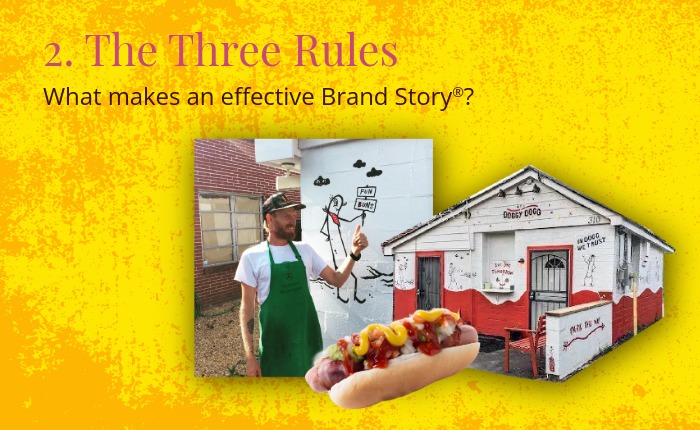
Big Brands Aren't Required — Doggy Dog Proves It
- James Hammerl started with a single hot dog cart in Atlanta and built a recognized brand with zero big-budget marketing.
- His origin story — watching a sausage vendor in a foggy Bavarian town square — gave the brand an authentic, compelling narrative.
- Tagline: "Bringing Cultural Ingredients to an American Classic" — a clear, ownable Big Idea.
- By elevating a humble hot dog to foodie status, Doggy Dog invented a new brand category: late-night, hipster hot dogs.
Key Insight: A guy with a hot dog cart and some customer sense can successfully position a brand.
A Brand Story Must Make Sense as a Story — Great Wraps
- Great Wraps had a strong, coherent position: healthy, wrap-based fast food — "Eat Great. Feel Great."
- The brand lost its footing by adding a Philly Cheesesteak to the menu — a classic off-brand move driven by short-term sales logic.
- The risk: one off-brand item signals to customers that the brand doesn't really stand for anything.
- Analogy: Adding a burger to Chick-fil-A's menu would undermine the entire brand story — the cows on the billboard, all of it.
Three Rules for an Effective Brand Story
- Align with your target customer's needs. Own a clear, relevant position — e.g., "We're the healthy alternative in the food court."
- Establish a differentiator. If you're "The Home of the Original Wrap," own it loudly. Your differentiator is the foundation of the brand story.
- Never let go of your brand concept. Resist every off-brand temptation — a cheesesteak, a burger, anything that dilutes the story you've built.
Key Insight: Brand story discipline isn't about limiting your business. It's about protecting the emotional position you've earned in your customer's mind.
Want to submit a review? Login