
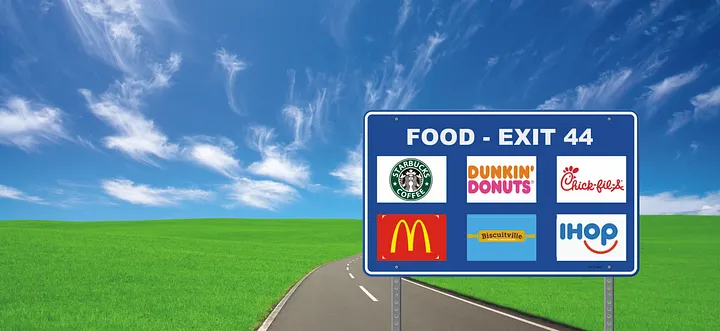
If market researchers invented a Rorschach test for brand potency, it might look like a highway sign. Brand positioning explains why.
Six logos appear in a flash before you must act on your Pavlovian response: Get off the freeway — or not — before the exit zips by.
At 70 mph, a subconscious burst of bias pulls you to one brand over the others. A logo is not a brand, but a logo activates a reservoir of feelings and associations which taken together is a Brand Story®.
Let’s dig into the six brand stories and how each one offers more than a cup of coffee:
Starbucks
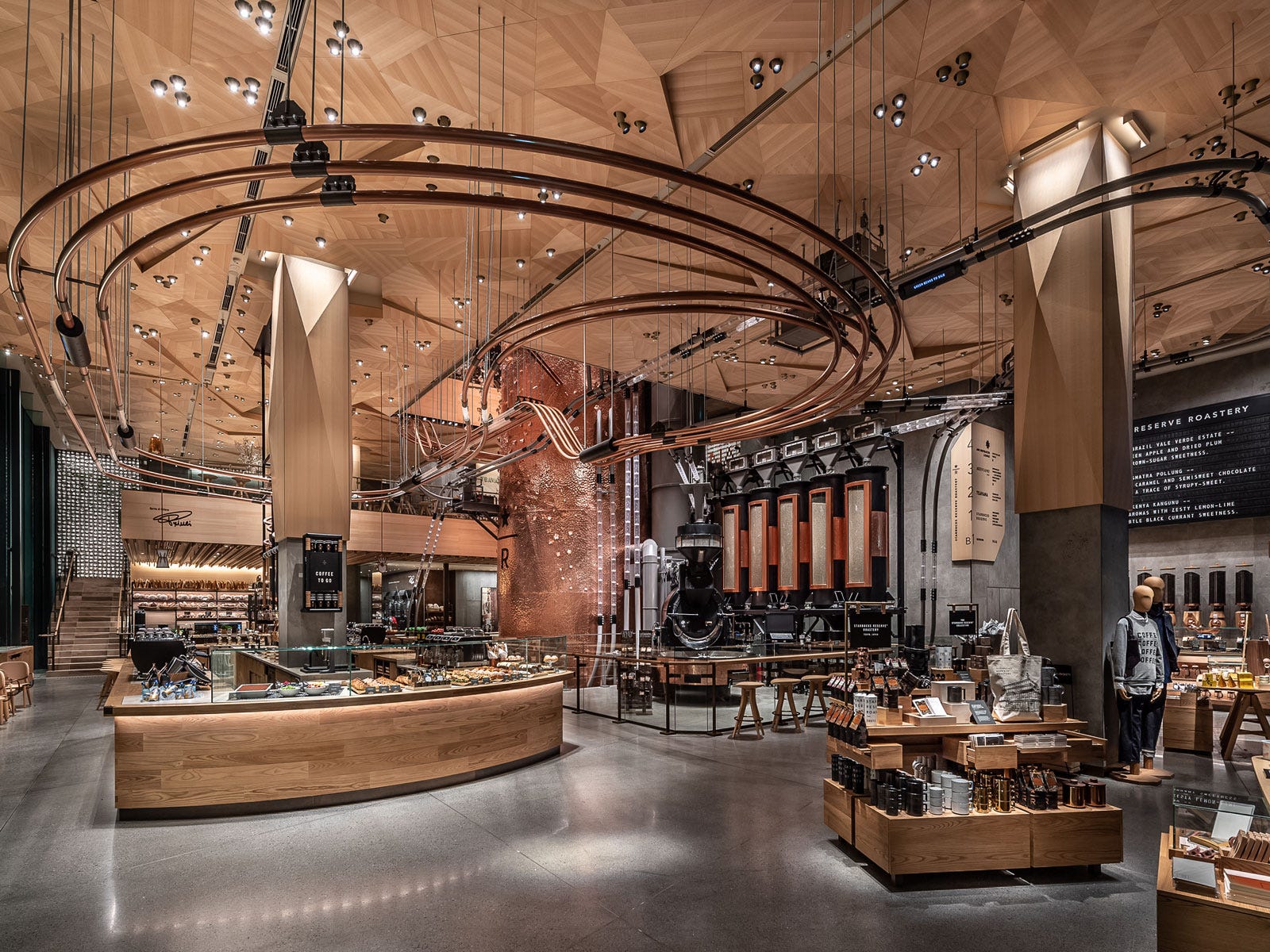
In 1982, Howard Schultz made a business trip to Milan, Italy, where he noticed how the local coffee bars served as public spaces— all 200,000 of them. From this experience, Schultz focused the Starbucks concept on comfort, aesthetics, and a place to meet — wholly different from the greasy diner/coffee shop scene in the States. Today, Starbucks is still more about the place than the product — or as one snarky customer pointed out on Twitter:
“Gas station coffee beats Starbucks. The only thing that keeps Starbucks in business is indoor seating and free WiFi.”
That’s because the Starbucks brand position is all about ambiance, which takes us to Dunkin:
Dunkin Donuts
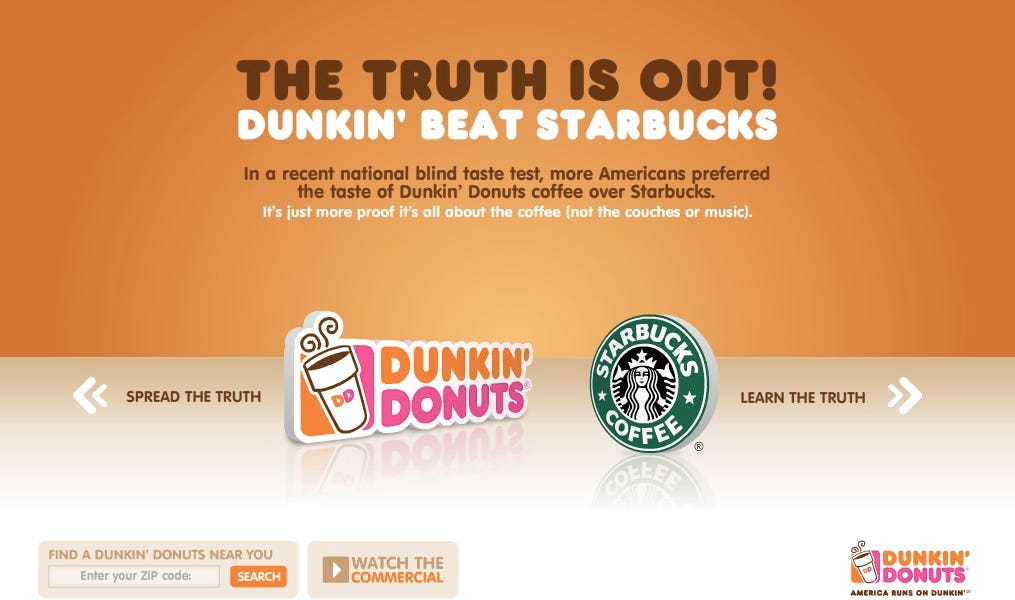
In 2008, Dunkin sponsored a blind taste test against Starbucks. With eyes closed, tasters preferred Dunkin 54% to 39%. As a result, Dunkin shifted its focus from donuts to coffee. Today, the company has taken the next logical next step, dropping “Donuts” from the name altogether.
Brand position: Dunkin is selling taste and convenience.
IHOP
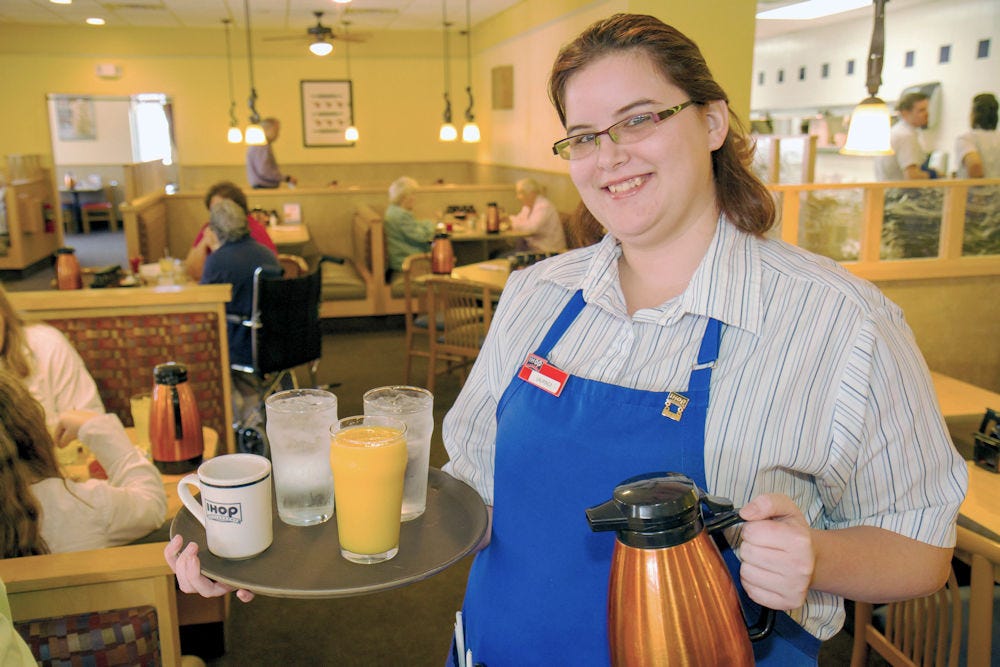
Dunkin may have dropped Donuts, but the International House of Pancakes will have set the precedent. In 1973, the acronym became the brand: IHOP. As a coffee destination, IHOP proudly ignores every coffee trend by listing a total of two brews on its menu: Reg and Decaf. Your waitress is central to the IHOP brand experience, refilling your never-ending cup while she calls you “hun.”
Brand position: IHOP personifies the “comfort” in comfort food.
In 2008, IHOP took their acronym to the next level with a faux name change to “IHOB.” The B for Burger campaign generated 20,000 stories and 36 billion earned media impressions. Burger sales rose (briefly), but as Brand Story people know, you can’t transform IHOP into Five Guys or In-N-Out by swapping a letter.
Biscuitville
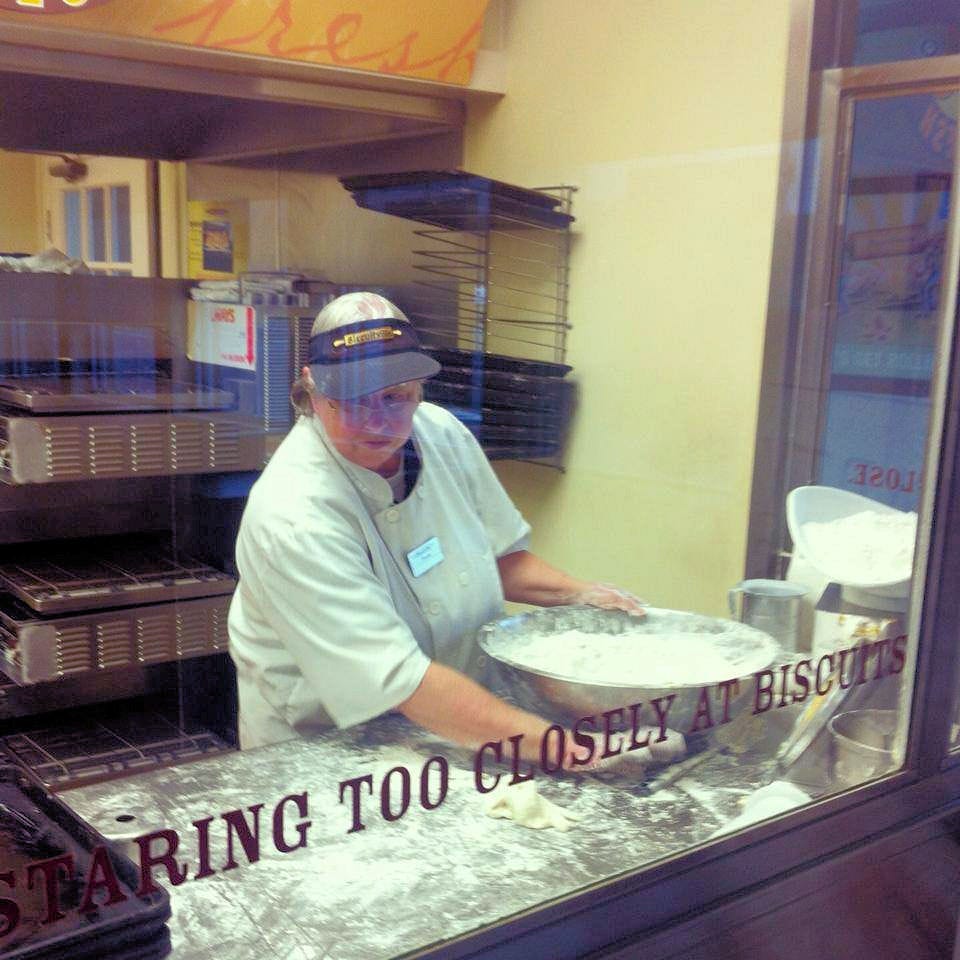
This North Carolina chain prepares home-style biscuits, sweet tea, and coffee the way God intended. Biscuitville makes its biscuits in realtime behind a glass partition. Their “biscuit lab” is a fabulous concept — so much so, I wish they would leverage it as the “big idea” for a cool brand. Despite a recent rebrand, their aspirations remain small and un-cool, which is okay with me given my transplanted love of Southern culture. Biscuitville sources its coffee from a family-owned roaster in Concord, NC .
Position: Biscuitville celebrates the South as proof that life doesn’t need to be complicated.
McDonald’s
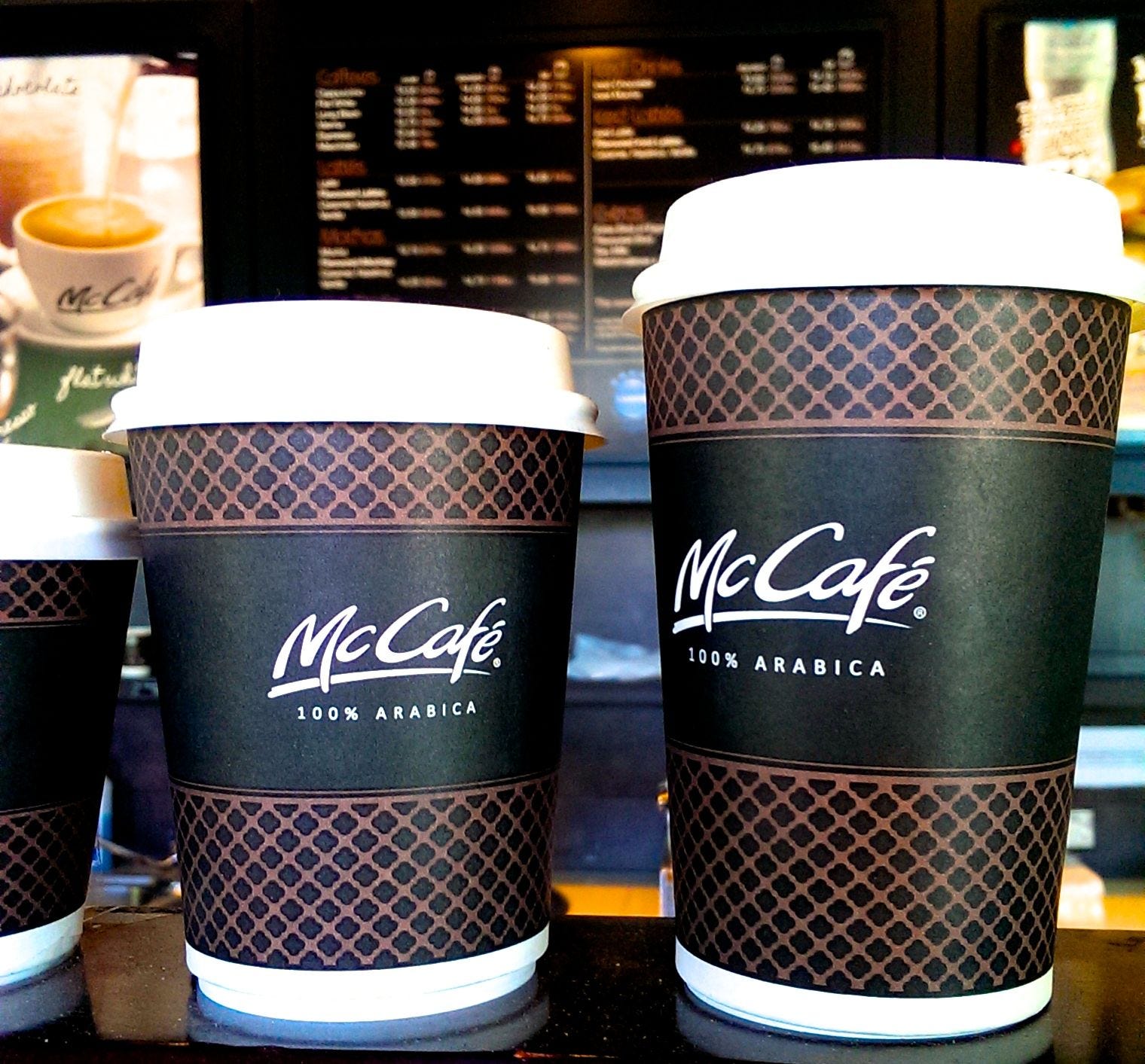
How do you pair a Big Mac® with a Machiatto? If you’re McDonald’s, nearly everything on the menu is a force fit. I imagine they aimed their marketing analytics ray gun at the fastest-growing restaurant category (coffee) and determined that espresso fits fine with a Happy Meal®. McDonald’s research likely identified two types of coffee drinkers: one in need of cheap coffee and the other looking for a cafe experience. It’s not clear which crowd McCafé is targeting.
Yes, McDonald’s beat the taste of Starbucks in a Consumer Reports test (everybody seems to), but did they expect coffee snobs to savor their Arabica with the aroma of fryer fat? Why not? Everything fits at McDonald’s.
Position: McDonald’s is clean, efficient, and predictable.
Chick-fil-A
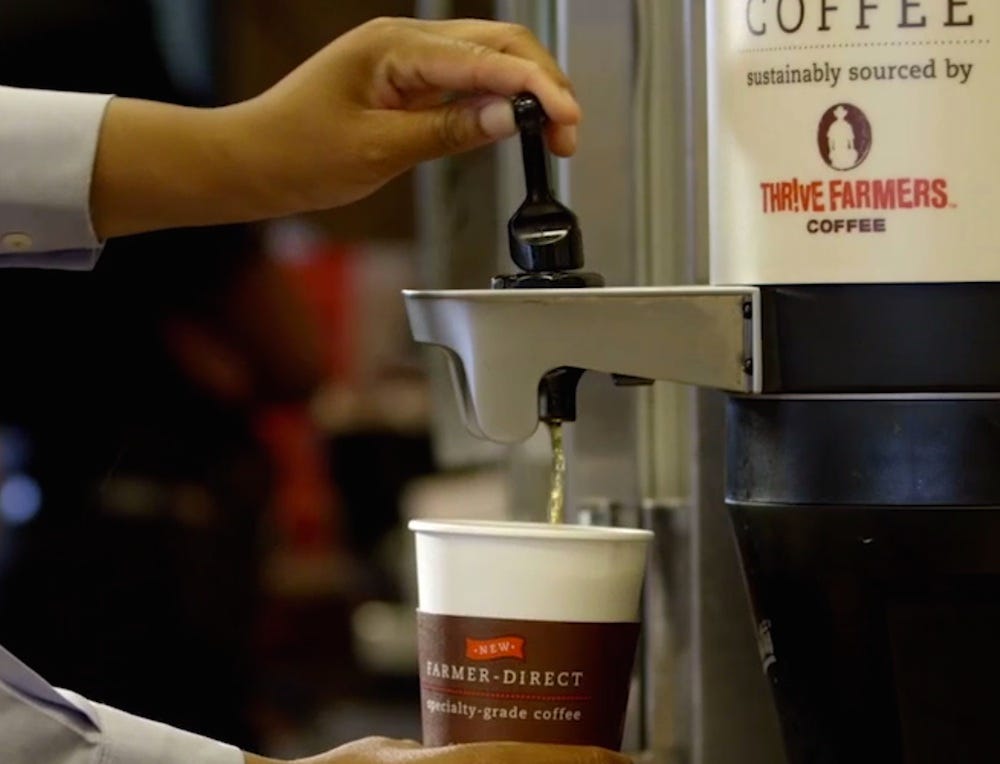
This never-on-Sunday chain built a passionate following for its chicken sandwiches — along with a sad reputation for blah coffee. I was part of their coffee-turnaround when we developed Chick-fil-A’s new coffee brand: Thrive Farmer’s. Chick-fil-A now serves great coffee that supports indigenous farmers, but unlike McDonald’s, Chick-fil-A did little to position itself as a coffee destination except change the brew.
Position: Chick-fil-A stands for exemplary customer service and well-earned loyalty.
Every brand (including yours) lives in a sea of brands. The same six-second Rorschach test applies to web sites: With a brief glance, will your visitor understand what you’re selling and why they need it?
Reflect on the brand chart below. Can you sense your feelings associated with each brand — the brand story —for each of the brands.
